




Losing a tooth – or several – doesn’t mean you have to settle for dentures that slip or restrict your diet. Dental implants are a revolutionary solution, offering seniors a chance to reclaim a smile that looks, feels, and functions just like natural teeth. Choosing implants is a significant step, but with the right information, you can navigate the process confidently.
What Makes Implants the Gold Standard?
Forget traditional bridges or partial dentures. A dental implant is essentially an artificial tooth root, typically made of titanium, surgically placed into your jawbone. This root provides an incredibly strong and stable anchor for a replacement tooth (a crown).
For seniors, the benefits are compelling:
- Longevity: With proper care, implants can truly last a lifetime—much longer than other restorations.
- Bone Health: Implants stimulate the jawbone, preventing the bone loss (atrophy) that naturally occurs when a tooth root is missing. This helps preserve your facial structure and prevents that “sunken” look.
- Comfort & Function: They never slip, never click, and allow you to eat all your favorite foods without worry.
- Aesthetics: They are custom-designed to blend seamlessly with your existing teeth.
Beyond the Basics: Implant Options for Seniors
While the core concept is the same, the way implants are used can vary significantly depending on how many teeth you’re missing and your jawbone health.
1. The Standard Solutions
| Implant Type | What It Is | Best For | Note for Seniors |
| Single-Tooth Implant | An implant placed for one missing tooth, topped with one custom crown. | Replacing one or two individual missing teeth. | The most straightforward procedure. |
| Multiple-Tooth Implant/Bridge | Two or more implants supporting a fixed bridge (a row of teeth). | Replacing several missing teeth in a row. | Avoids the need to grind down healthy teeth, unlike a traditional bridge. |
2. Solutions for Full Arch Replacement
If you are missing most or all of your teeth, these are the common modern options:
- All-on-4 (or All-on-X): This technique uses four (sometimes more) strategically placed implants to support an entire arch of fixed teeth (upper or lower). The key benefit is that it often avoids the need for extensive bone grafting, making it suitable for many patients with some bone loss.
- Implant-Supported Dentures (Overdentures): A full denture that snaps onto a few strategically placed implants (usually 2 to 4). These are still removable by the patient, but they offer vastly superior stability and retention compared to conventional, adhesive-dependent dentures.
The Senior Health Check: Are You a Good Candidate?
While the guide mentioned bone health, it’s crucial to understand the medical factors unique to older adults.
Bone Density and Grafting
If you’ve been missing teeth for a long time, your jawbone may have deteriorated.
- Endosteal implants (placed directly in the bone) are the standard. If you don’t have enough bone, your dentist may recommend bone grafting—a procedure to build up the bone mass, which is often successful but adds time to the overall process.
- Subperiosteal implants (placed on the bone, under the gum) are a much older, less common option, usually reserved for patients with severe bone loss who cannot undergo grafting. Newer techniques like All-on-4 have largely made this obsolete.
Managing Chronic Conditions
Implants have a very high success rate (over 95%), but certain health conditions require careful management:
- Diabetes: Uncontrolled diabetes can slow healing and increase the risk of implant failure. If well-managed, it’s typically not a disqualifier.
- Smoking: Significantly increases the risk of complications and failure. Dentists will strongly encourage quitting or drastically reducing smoking before and after surgery.
- Medications: Inform your dentist about all medications, especially bisphosphonates (used for osteoporosis), as these can impact bone healing and require specific planning.
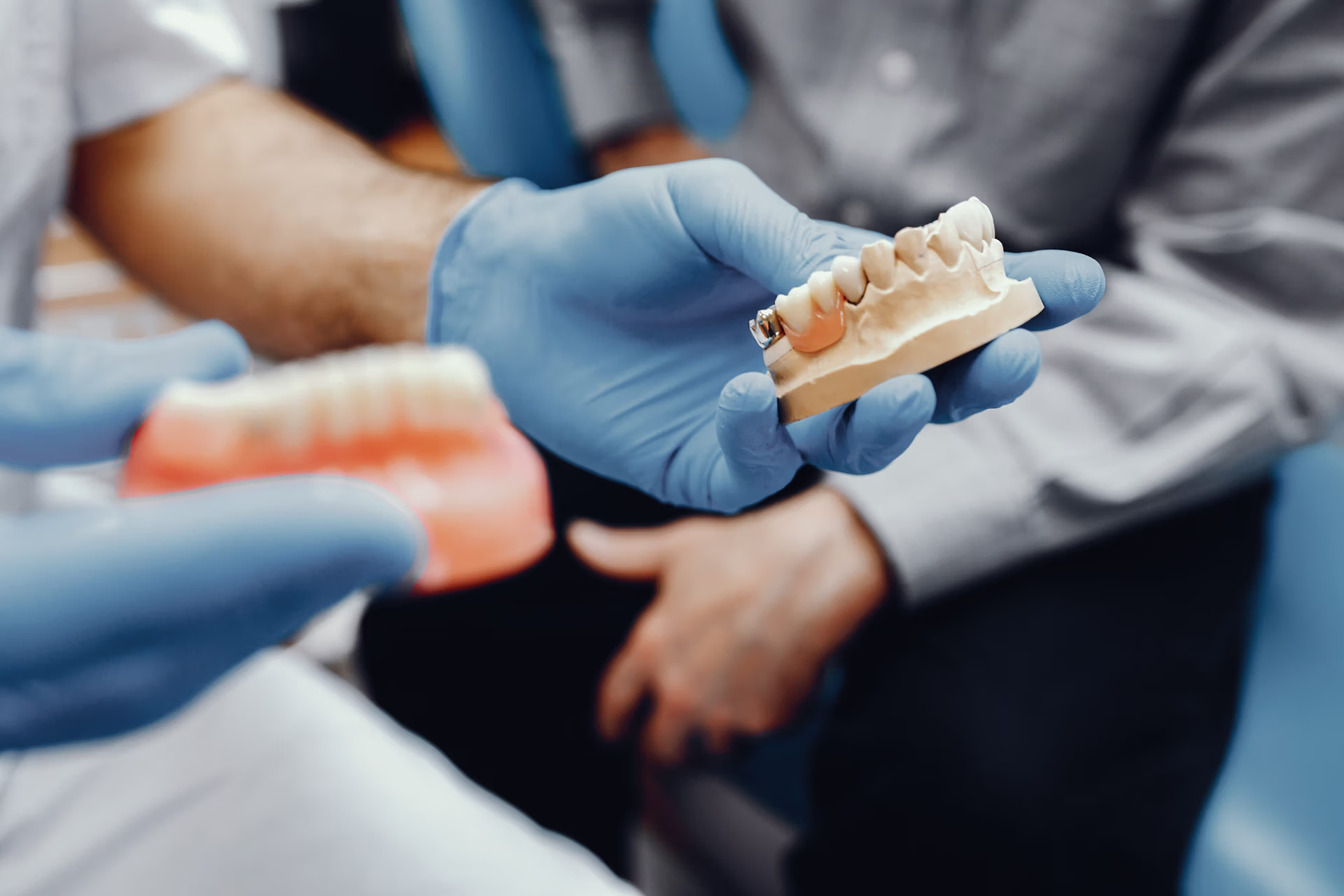
The Journey: What to Expect During the Procedure
The implant process is often described as two stages, but it’s best to view it as a carefully managed journey:
- Planning & Preparation: This is the most critical stage. It involves X-rays, 3D CT scans (for precise bone mapping), and the creation of a detailed surgical plan. If needed, this is when extractions or bone grafting occur.
- Implant Placement (Stage One): The implant post is surgically placed into the jawbone.This is usually done in the dental office with local anesthesia and is often less uncomfortable than a simple tooth extraction.
- Healing and Osseointegration: A vital 3-to-6-month period where the implant fuses with the jawbone a process called osseointegration. This creates the stable foundation needed for long-term success.
- Abutment and Crown Placement (Stage Two): Once the implant is stable, a connector piece (abutment) is placed on top, and your custom-made, permanent replacement tooth (crown) is attached.
Choosing the Right Specialist: Ask the Expert Questions
This complex procedure requires a skilled specialist. Look beyond a general dentist and consider professionals with advanced training.
Essential Questions to Ask
In addition to the ones you provided, use these to vet your specialist:
| Core Question | Why It Matters |
| “Do you perform the surgery AND the restoration (crown/bridge), or do you work with a specialist?” | Some dentists do both; others, like a Prosthodontist (crowns) or Oral Surgeon/Periodontist (surgery), work as a team. Knowing the structure is key. |
| “What kind of diagnostic technology do you use (e.g., 3D Cone Beam CT)?” | Modern, successful implantology relies on 3D imaging for precise, safer placement. |
| “What is your protocol for managing my specific health conditions (e.g., controlled diabetes)?” | This gauges their awareness of how systemic health impacts implant success. |
Looking for Credentials
- The American Academy of Implant Dentistry (AAID) is a great resource, as you noted.
- Look for dentists who are Board-Certified by the American Board of Oral and Maxillofacial Surgery (for surgeons) or the American Board of Periodontology (for periodontists).
Lifelong Care: Protecting Your Investment
Your implants can last a lifetime, but they are not maintenance-free! Implants can still be affected by gum disease, a condition called peri-implantitis.20
- Rethink Flossing: You will need special techniques, like water flossers or specialized implant floss, to clean all the way around the posts.
- Non-Abrasive Products: Use soft-bristled brushes and non-abrasive toothpaste to protect the crown and surrounding gum tissue.
- Regular Check-ups: Maintain a consistent schedule of professional cleanings (usually every 3-4 months) with a hygienist trained to care for implants.
Choosing dental implants is an investment in your health, comfort, and quality of life. By understanding the options and partnering with an experienced specialist, you can look forward to a complete, confident smile.
Do you have any questions about specific implant procedures or how they might affect your current health status?


